


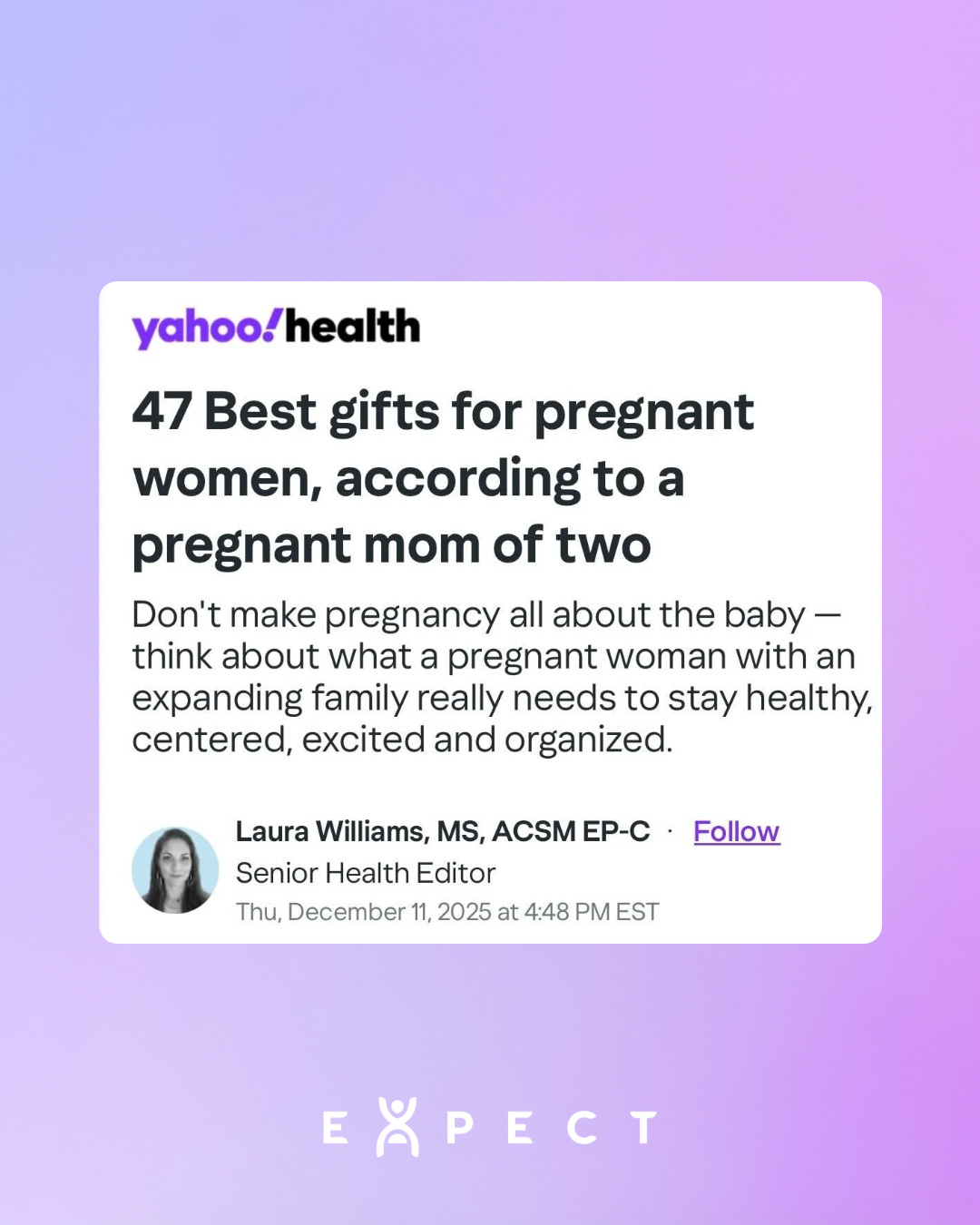
When Yahoo! Health’s Senior Editor Laura Williams included Expect in her holiday gift guide for pregnant women, she did more than recommend the app—she highlighted something that matters deeply: the gap between what women need and what they’re actually getting.
Laura, a mom of two expecting her third at 43, wrote candidly: “Pregnancy… It’s not a walk in the park. As much as you hear about the ‘glowing’ effects of this phase of life, the reality is much less ‘rainbows, puppy dogs and great expectations’ and much more ‘nausea, heartburn, back pain and high levels of stress.’”
The Real Story: Why Pregnancy Fitness Isn’t Optional
Here’s what caught our attention in Laura’s piece—and what every pregnant person should know:
Exercise during pregnancy significantly reduces:
Pregnancy symptoms and aches
Risk of preeclampsia
Risk of gestational diabetes
Likelihood of preventable C-sections
Postpartum depression risk
But there’s a catch Laura identified: most pregnant women don’t know where to start.
The Knowledge Gap Is Real
Laura’s observation—that pregnant people are “unsure about where to begin”—reflects a systemic problem in maternal healthcare. Despite the American College of Obstetricians and Gynecologists’ recommendations for regular exercise during pregnancy and postpartum, many providers don’t have the time to offer specific guidance on safe movement.
This creates a vacuum where pregnant women either:
Avoid exercise entirely out of fear
Follow generic fitness advice not designed for pregnancy
Piece together conflicting information from social media
What Makes Pregnancy Fitness Different
Laura specifically noted that Expect offers “exercise routines (including cardio, strength training, dancing and even labor prep) all approved for safety and efficacy by OB/GYNs.”
This distinction matters because in pregnancy your body is undergoing profound physiological changes:
Your blood volume increases 40-50%
Your center of gravity shifts
Relaxin loosens your joints
Your pelvic floor bears increasing load
Your core muscles may separate (diastasis recti)
Generic fitness programs don’t account for these changes. OB/GYN-approved programming does.
The Bigger Picture
Laura’s recommendation comes at a crucial time. As healthcare costs and maternal complications rise, preventive fitness is one of the most cost-effective interventions we have—yet it remains largely inaccessible to most pregnant women.
When a respected health editor with personal experience recognizes this gap and specifically calls out the need for expert-approved guidance, it validates what we’ve known: maternal fitness is healthcare.
What This Means for You
If you’re pregnant or planning to be:
Exercise isn’t optional—it’s one of the most powerful tools for a healthier pregnancy
“Safe” matters—not all movement is appropriate for every stage
Expert approval matters—your OB/GYN should approve your fitness routine
Access matters—you deserve resources that don’t require expensive trainers or gym memberships
Ready to get started? Download the Expect app or learn more at expect.fit.
Read Laura Williams’ full article on Yahoo! Health here.