


If walking is your go-to workout, you know the feeling: You check your phone, see a wind chill warning, and suddenly your perfectly planned walk is... canceled?
Not quite.
Walking is a favorite exercise during pregnancy and postpartum—and you don’t need perfect weather or a treadmill to make it happen. You just need to get creative.
Walking is also one of the most studied—and recommended—exercises during pregnancy for good reason. It helps maintain cardiovascular fitness, supports healthy weight gain, reduces swelling, and can ease common discomforts like back pain and constipation. Research on prenatal exercise (including walking) also shows it can help lower the risk of gestational diabetes and support healthier blood glucose control. Even 20–30 minutes on most days of the week can make a meaningful difference. Postpartum, it’s a gentle, effective way to rebuild stamina and support mood.
Here’s how moms can keep walking—even when Mother Nature has other plans.
The Indoor Walking Mindset Shift
First, let’s reframe what “a walk” means.
It doesn’t have to be 30 minutes straight. It doesn’t require scenic views or fresh air. What matters is movement—consistent, low-impact, intentional movement that gets your heart rate up and your body moving.
Translation: Shorter bursts throughout the day count. A lot.
Research Backup: You don’t need one long walk for it to “count.” National guidelines now recognize that activity accumulated in short bouts still delivers real health benefits—and research comparing accumulated vs continuous walking shows similar gains in fitness and blood pressure when the total time is the same.
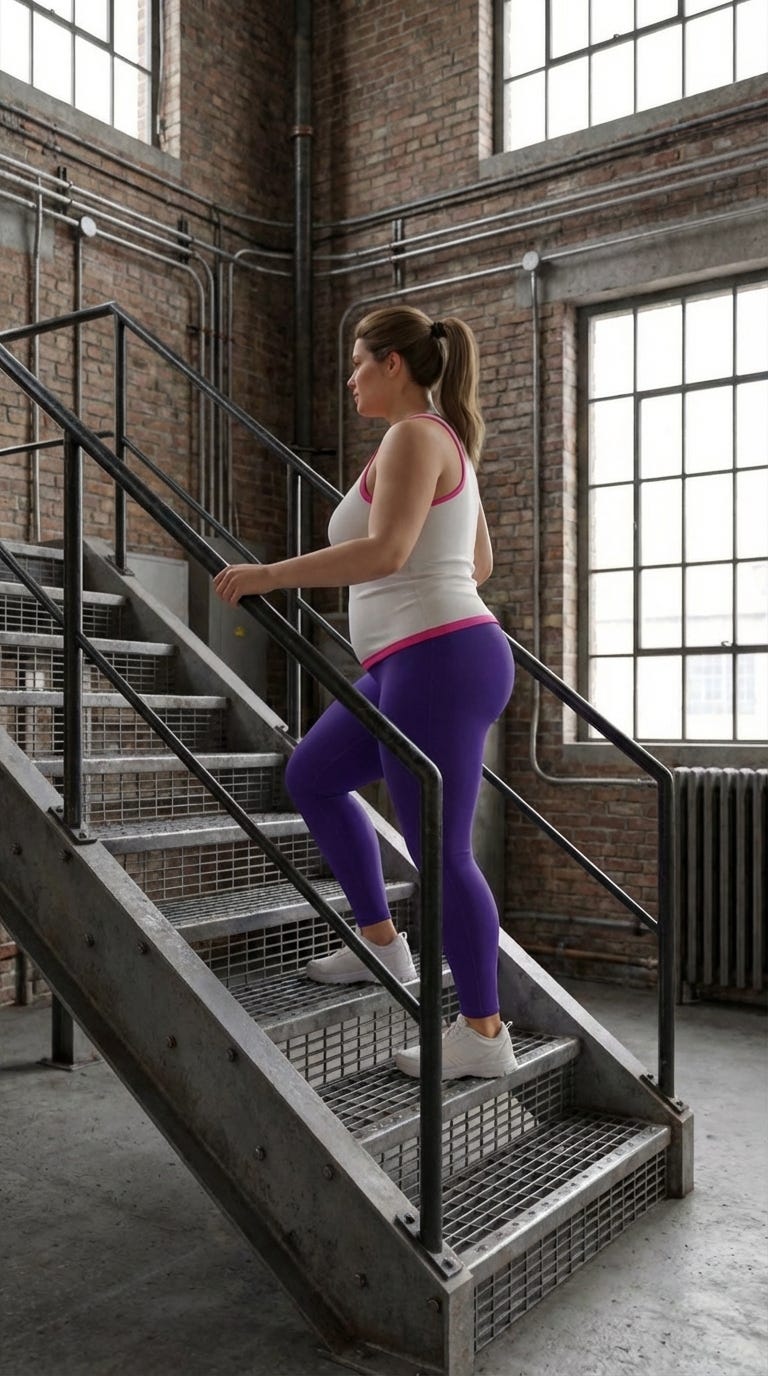
Strategy 1: The Staircase Circuit (The Space-Saver)
Why it works: Stairs add intensity without adding time. Walking up and down stairs engages your glutes, quads, and core—all critical for pregnancy posture and postpartum recovery.
How to do it:
Find a staircase in your home, apartment building, or office.
Walk up slowly and with control. Walk down with intention (no rushing—balance shifts during pregnancy).
Start with 5 minutes. Gradually build to 10-15 minutes as you feel stronger.
Pro Tips: Hold the railing for stability. If stairs start feeling too intense, walk up, then take the elevator down if you have access to one.
Strategy 2: Walking Lunges (The Strength Builder)
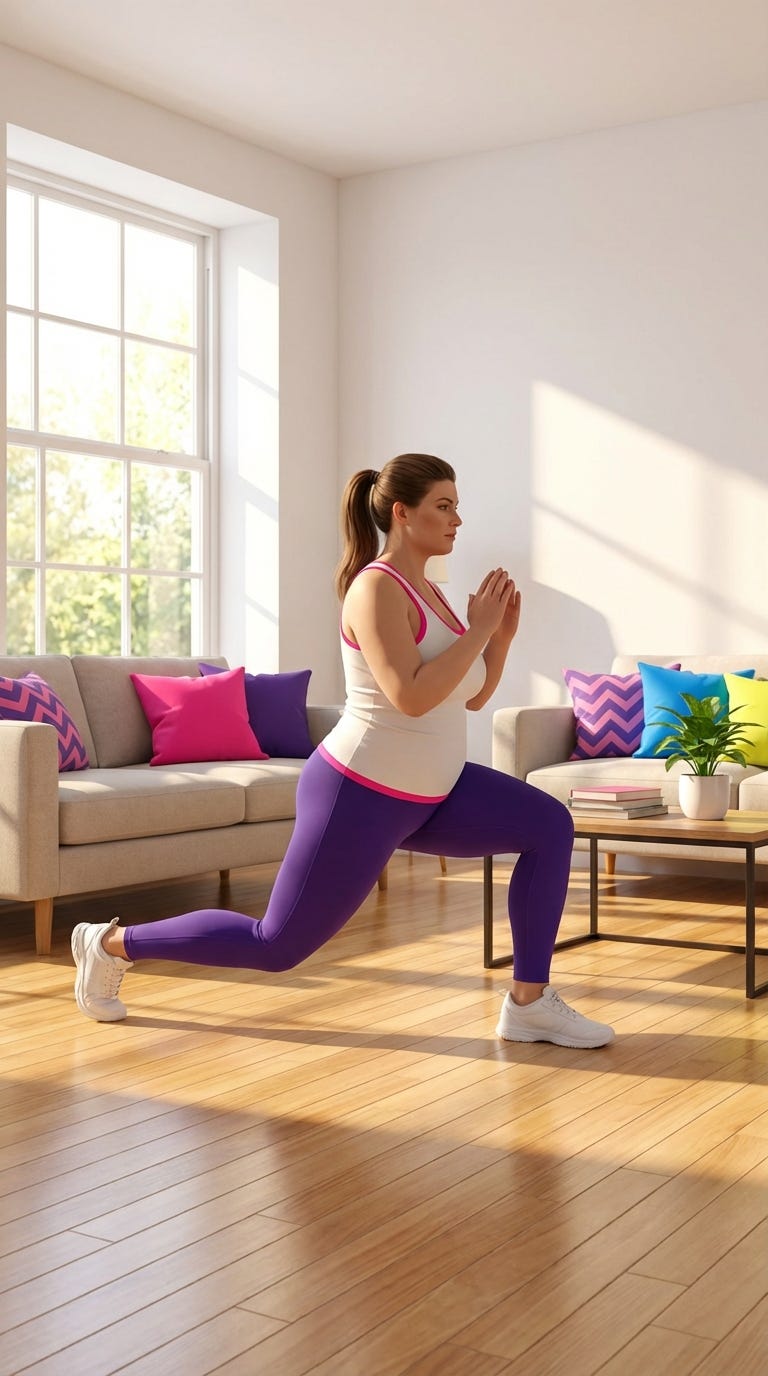
Why it works: Walking lunges combine cardio with functional strength training. They fire up your legs, improve balance, and prepare your body for the physical demands of labor and carrying a baby (or toddler).
How to do it:
Stand tall in a hallway or open room.
Step forward with your right leg into a lunge (knee over ankle, not past toes).
Push through your front heel to step the back leg forward into the next lunge.
Alternate legs as you move forward.
The Count: Start with 10 lunges per leg (20 total). Do 2-3 sets with rest in between.
Modification: If lunges feel too challenging, do split squats (keep your feet planted in a lunge stance and lower your hips straight down and up).
Strategy 3: The Phone Meeting Walk (The Multitasker)
Why it works: You’re already on a call—why not move while you talk? This is perfect for remote workers or anyone with virtual meetings.
How to do it:
Pop in your headphones.
Walk laps in your home while you listen or speak.
If you’re on camera, stand up and walk in place.
The Math: Three 15-minute calls = 45 minutes of walking. Done.
Pro Tip: This is also fantastic for postpartum moms managing conference calls during nap time. Movement + productivity = win.
Strategy 4: The Office Lap (The Connection Play)
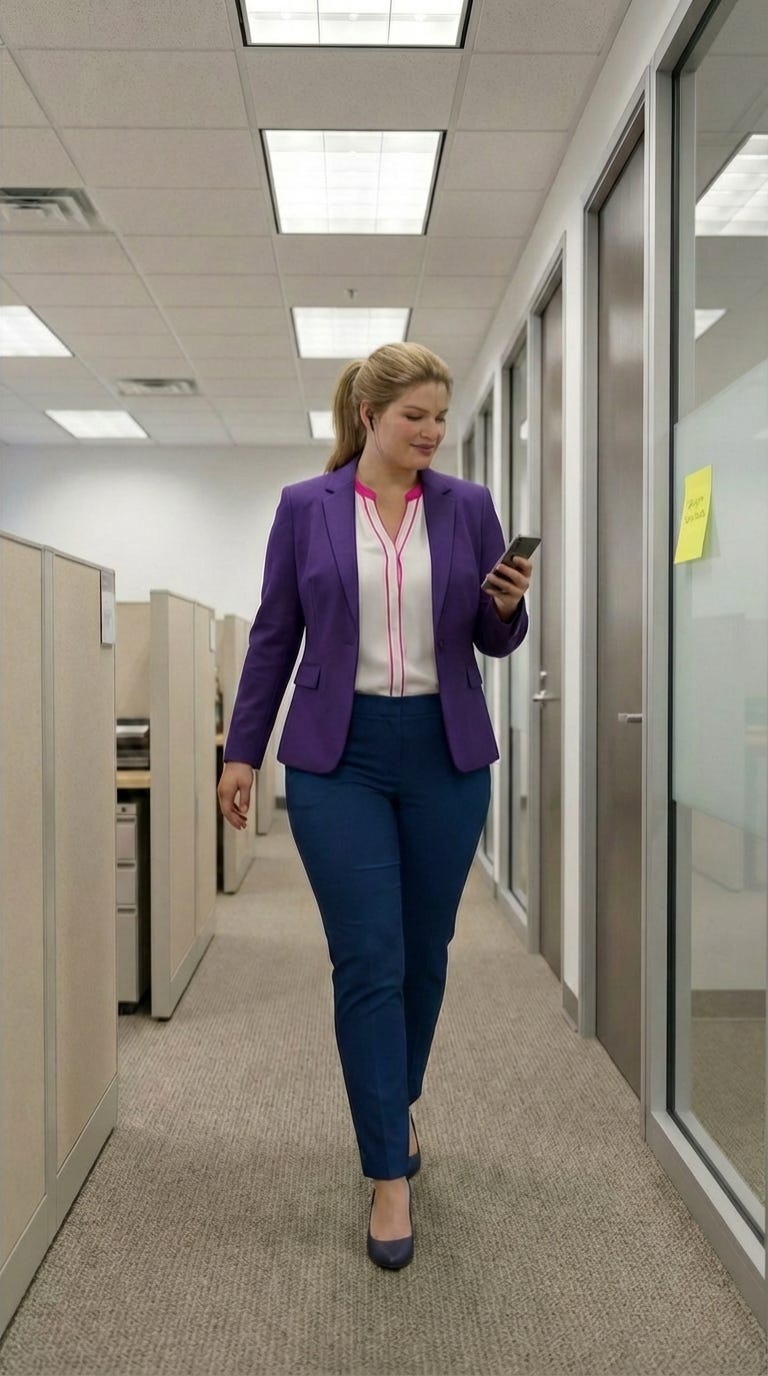
Why it works: If you work in an office, getting face time with coworkers doesn’t have to happen sitting down. In the book Likeable Badass, UNC Kenan-Flagler Business School professor Alison Fragale talks about how visibility and presence can help you advance your status at work—so use the office lap to stay active and build relationships.
How to do it:
Use breaks to walk the indoor perimeter of your office or building.
Take walking “coffee chats” with colleagues (even if it’s just a lap around the floor).
Walk to a colleague’s desk to ask a question instead of sending an email.
The Hidden Benefit: Studies show that walking meetings boost creativity and focus—so you’re not just moving, you’re performing better.
Strategy 5: The Micro-Walk Stack (The Consistency Hack)
Why it works: Short walks throughout the day add up—and they may even be more effective than one long walk for managing blood sugar and energy levels during pregnancy.
How to do it:
Set a timer for every 60-90 minutes.
Walk for 5-10 minutes: around your home, up and down stairs, or even marching in place.
Repeat 4-6 times throughout the day.
The Math: Six 10-minute walks = 60 minutes of movement. No gym required.
Research Backup: Research on “breaking up sitting” shows that short walking breaks can improve post-meal glucose control—one more reason micro-walks can be so useful when you’re spending more time sitting down.
Don’t Forget: Expect Has Walking Workouts
If you want guided structure (and a little extra motivation), the Expect App includes walking workouts designed specifically for pregnancy and postpartum.
These workouts are:
Approved by board-certified OB/GYNs
Designed to be done indoors or outdoors
Scalable to your trimester and energy level
You can follow along at home, in a hallway, or even in your backyard. No treadmill necessary.
The Bottom Line
Cold snaps happen. Heat waves occur. Pregnancy fatigue and postpartum sleep deprivation definitely happen.
But walking—the single most accessible, effective, and pregnancy-safe exercise—doesn’t have to stop.
You don’t need perfect conditions. You just need a few minutes of intention.
Your body (and your baby) will thank you.